With passion & delicacy
Interview |
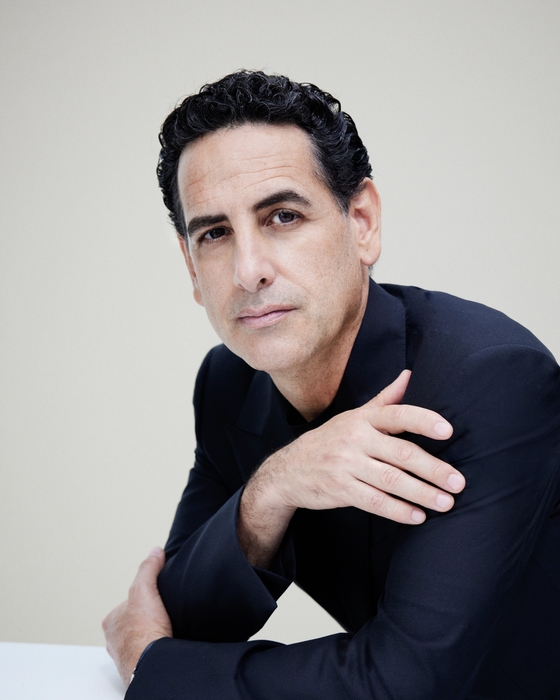
He has already been Tonio and Alfredo, Faust and Ernesto, Arturo and Pollione, Count Almaviva and countless others: Juan Diego Flórez, tenor, Kammersänger, world star and audience favorite. He has now added another important role to his large Viennese repertoire of roles - he made his debut at the State Opera in 1999 and has appeared in around 170 performances to date - Rodolfo in Giacomo Puccini's La Bohème. In the following, he explains his thoughts on the role, the figure of the romantic poet and the subject of freedom in opera. The questions were asked by Oliver Láng.
In one of his books, Kazuo Ishiguro raises the idea that art can express a person's true soul. When we listen to Rodolfo's singing in La Bohème: What can we learn about the innermost essence of this character?
Puccini was a master at revealing the character of a figure through song, but also through orchestration. Rodolfo also reveals himself completely through his music. His singing reveals vulnerability, passion, poetry and the idealism with which he views the world, but also the fear he tries to hide. Every phrase brings us closer to him: his desire to love, to dream and later his inability to face up to suffering. Rodolfo is not a psychologically complicated character; he is almost transparent.
For the composer Puccini, La Bohème was a very autobiographical work. The poor but, despite their hardship, happy students - that's where he found himself. Was the young Juan Diego also a Rodolfo?
In a way, yes. I wasn't a bohemian in the strictest sense, but I felt a kind of artistic hunger, an obsession with music, with learning, with the idea of a future that seemed distant and uncertain. I also experienced moments of great joy, mixed with difficulties, and had to improvise my life from day to day. Especially in Peru: I lived with my grandmother in a small apartment, playing the piano or singing while she painted. It was a kind of artistic and simple life.
Generally speaking, is it more pleasant for you if you have an inner relationship with an opera character that you portray? Or would you prefer a character who has as little to do with you personally as possible?
A connection is always helpful because it makes the character more authentic. But sometimes the roles that are furthest away from me are the most liberating, because they force me to explore shades, impulses or emotions that I would never have access to in my everyday life. For example, the crazy role of Corradino in Matilde di Shabran.
Many people's eyes well up with tears every time Mimì dies. How do you feel as a singer? Is empathy allowed? Or do you need a professional distance?
It depends on the moment. Of course, you are always emotionally gripped on stage. But as a singer, you have to control yourself and be aware of many things, so it's different to being in the audience. But I've often cried during Mimì's death scene - I think everyone does, even if you don't want to.

After a concert in Grafenegg, you spontaneously sang the Rodolfo aria from Act 1 as an encore, accompanied by Rudolf Buchbinder. How important is spontaneity to you? Is it the salt in the opera soup?
Very important! Spontaneity reminds us what music actually is. When the moment is right, the atmosphere, the audience and your own mood, then a kind of electric tension arises. Rudolf Buchbinder and I instinctively experienced such a spark in Grafenegg - and it was a great moment! Such moments cannot be completely planned. They are like musical gifts that only happen once - and are therefore so much appreciated by the audience.
One of your colleagues recently said that a great work of art raises more questions than it answers. What questions does La Bohème ask us?
The opera asks us what it means to love in the face of such fragility of life. It asks whether youth protects us or makes us vulnerable. It asks whether art can justify sacrifice, whether passion can coexist with poverty - and why beauty so often appears in conjunction with tragedy.
Puccini wrote meticulously precise interpretation instructions in the score, a conductor leads the evening, there is an existing staging. Where is your personal freedom as a singer?
I have the feeling that there is a lot of freedom on stage, especially on repertoire evenings like La Bohème, which didn't have too many rehearsals. I love performing and feeling that anything can happen. In my opinion, music should have this improvisational quality to create space for inspiration.
What does a good Rodolfo need?
A poetic spirit, a youthful timbre and the ability to sing with both passion and delicacy. Rodolfo needs passion, but also delicacy. And above all, you have to believe in him: in his dreams, in his fears, in his love for Mimì. If the singer believes, the audience will too.
Most recently, they sang Tonio in The Regiment's Daughter at La Scala in Milan. A bel canto work from the pen of Donizetti. When Rodolfo is on the schedule, do you need a different vocal preparation? A different warm-up in the evening?
Donizetti's bel canto requires agility, lightness and many high notes. Rodolfo, on the other hand, requires a warmer color palette, longer legato arches and greater lyrical development without being heroic or dramatic. Before I sing Rodolfo, I concentrate on the flow of breath, chiaroscuro and warmth in the middle register. Singing Donizetti is more about flexibility and clear focus. They are two different worlds, so the voice has to be placed in the right environment before the performance begins.