The power of forgiveness
Interview |
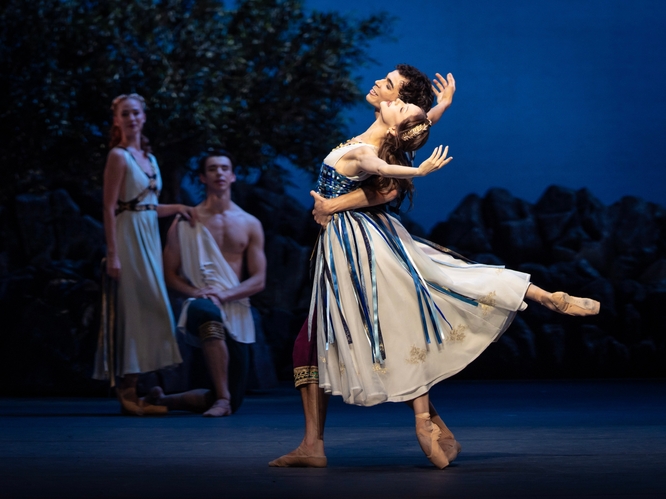
What inspired you to create the complex story of the novel Kallirhoe as a ballet?
My entire work as a choreographer is characterized by the search for scores and stories. It usually starts with the music and in the case of Kallirhoe it was the magnificent score to the ballet Gayaneh by the Armenian composer Aram Khachaturian that immediately fascinated me.
I have loved his music for a long time, but the original "Soviet" plot of this work seemed intolerable to me. But what this music contains is raw energy, imbued with an old Armenian tradition, with powerful melodic and rhythmic variety.
The decisive factor was a tip from my dramaturge Guillaume Gallienne. He drew my attention to the novel Kallirhoe by Chariton of Aphrodisias, which is considered to be the oldest novel to have survived in its entirety. Surprisingly, it is hardly known, hardly anyone has ever read it. I studied it and quickly realized that it was perfect.
Why is the story still relevant today?
Despite the historical distance, Kallirhoe shows that fundamental human experiences hardly change. The political developments of the last ten years seem to show that many things repeat themselves, that progress is often illusory and that we are still people who are guided by emotions.
The work makes it clear that an understanding of good and evil, of mistakes and forgiveness, must be constantly renegotiated. The characters may have different circumstances, but at their core they are the same people we are today and their decisions, their conflicts and their feelings are of timeless relevance.
What is so special about the title character Kallirhoe?
It is the story of the "most beautiful woman in the world", which goes hand in hand with the question of what that actually means. At first, this beauty seems like a gift from the gods, but it soon becomes clear that it is a burden: every man who sees Kallirhoe falls in love with her and wants to possess her. And yet she is not a passive figure, but an exceptionally strong woman.
Despite all the violence Kallirhoe is subjected to, she makes her own decisions and in the end is faced with the question of whether she forgives the man she loves and who has done terrible things to her - and she does. For me, that's the key to this story: forgiveness.
I have thought a lot about the fact that people today often don't get a second chance. Past mistakes lead to exclusion, regardless of whether someone has changed. But life is a journey, we are not the same at every stage of our existence. Mistakes can teach us something or not, but I think it's important to always consider the possibility of forgiveness.
Your work draws on ideas from antiquity. What does that mean to you?
With Kallirhoe, I am immersing myself in a world that is very close to my heart. I am obsessed with ancient Greek and Roman art. So it was an opportunity for me to bring my impressions, my knowledge and the images I love into this work.
On the other hand, there is the discovery of beauty by the Greeks - and Greek aesthetics is the basis of classical dance. It emerged as a rebirth of the ideas of harmony, proportion, weight and posture found in the sculptures and artworks of antiquity.
Stage and costume designer Jean-Marc Puissant, an artist of great knowledge and sensitivity, has also carried out extensive research to create a set that not only incorporates historical references, but is also timeless and lively.