A palette with many colors
Ballet |
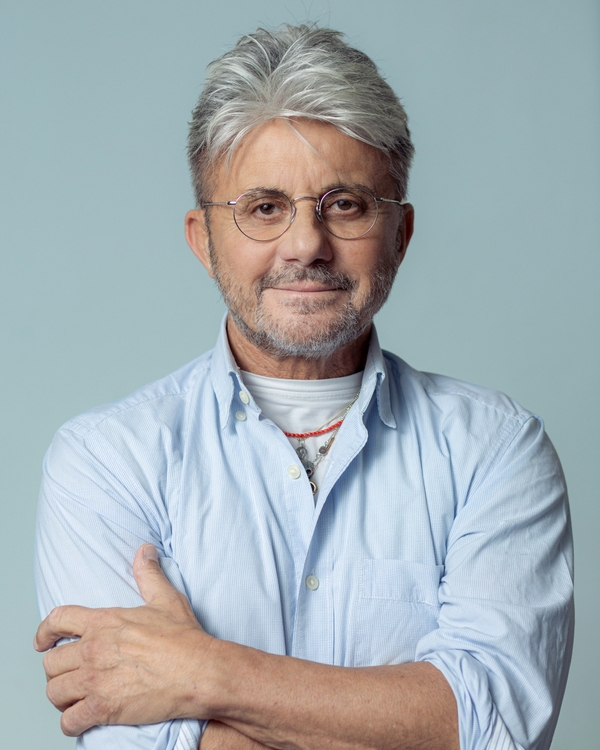
You can look back on a close, long collaboration with Roland Petit. in 1975, you joined his Ballets de Marseille, where he created many roles for you, including Ulrich in "Die Fledermaus". You later became his assistant and rehearsed Petit's ballets worldwide. Since his death in 2011, you have had artistic responsibility for rehearsing Petit's entire repertoire. How would you describe your work with him and what kind of person was he?
Roland Petit was very demanding and also required everyone else to work really hard. But it was always a great pleasure and I learned so much from him, especially discipline. He could be strict, but he always had a reason for it, as he wanted to get everything out of the dancers. He could discover facets in you that you didn't even know you had and spur you on to peak performance. He managed to do the same with me. I wasn't a particularly good spinner, but when I worked with Petit, I could do five pirouettes and more! It was the adrenaline rush and the enthusiasm that he triggered. For me, the time when he was creating was the best. I learned everything from him and even danced and sang in musicals on Broadway.
Did Roland Petit already have a concrete concept when creating the show or were the dancers able to bring their own ideas to the roles?
It was great when he created a new ballet! He would come into the studio and say: "Please turn on the music!". Then he started choreographing the steps with almost no preparation. However, he knew exactly what was going to happen musically at which point - a pas de deux or a solo, for example - what he wanted and who he had in front of him. He also always emphasized that he was not doing the choreography alone, but together with the dancers.
Petit's ballets are very versatile - humorous or dramatic, one-acts or big story ballets - and combine various dance styles. In "Die Fledermaus" you can see pure classical-academic dance, but also can-can, csárdás and, of course, waltzes ...
Roland Petit was like a painter with a palette of many colors. He created completely different ballets such as "Die Fledermaus", "Notre-Dame de Paris", "Ma Pavlova", "Pink Floyd Ballet", "Duke Ellington Ballet", "Carmen" and "L'Arlésienne". Nevertheless, he had his very own style and was an excellent storyteller. When you see Die Fledermaus, for example, every movement, every gesture, every situation has a meaning. It's never just a dance step without meaning or just there to show technique. I always say that Roland Petit's choreographies are very easy to understand for people who have never seen a ballet before. In Die Fledermaus there are many funny scenes from everyday life, such as when the whole family with the five children sits around the big dining table. It was a pleasure to create this scene with Zizi Jeanmaire in the role of Bella - we laughed so much.
What was it like for you to perform and work with Zizi Jeanmaire - Roland Petit's wife, French ballet and revue dancer, actress and chanson singer and protagonist in many of Petit's ballets?
It was fantastic! In the 1960s, there was a big TV show every Saturday night and Zizi was on it with Roland Petit. I didn't know who they were back then. But I watched every show and was fascinated by Zizi's incredible charisma. When I joined the company in Marseille many years later, she was there too and I was overwhelmed! We immediately had a good relationship, danced and talked a lot.
How do you teach Petit's style and humor in Die Fledermaus to today's generation?
There are a lot of acting scenes, some almost reminiscent of slapstick. How do you teach the dancers to find the right balance so that it doesn't come across as exaggerated or clownish?
That is a lot of work. Nowadays, anyone can rehearse a ballet with the help of a video, but it's not the same. Teaching the steps is easy - that's important, but it's not everything. It's about the feeling, about conveying the spirit of the choreographer, and that's not easy. I often encourage the dancers: "Don't be shy - if it's too much, I'll tell you. But dare to express yourself, to feel, to dance from the heart." Because Roland Petit is exactly that: real life, very human and touching - like Bella, for example, who tries everything to open her husband Johann's eyes and win him back because he goes out every night and seeks pleasure elsewhere. She calls her friend Ulrich for help and in the end she cuts off Johann's wings and puts his slippers on. Great!
What significance does it have for you to rehearse Die Fledermaus in Vienna, the birthplace of the "Waltz King" Johann Strauss Sohn?
This is of course fantastic - especially now, on the 200th anniversary of Strauss' birth! It really is something special, and I think it's a great idea and program by ballet director Alessandra Ferri to perform Die Fledermaus again in this place and in this special year. For me, it is also wonderful to rehearse the ballet here again and to see how the dancers develop and come out of their shells. We also have a very good and diverse cast. So it will definitely be interesting to watch this piece several times.