Francis Poulenc

Dialogues des

Carmélites

Opera

Oper in drei Akten und 12 Bildern Text nach dem Drama von Georges Bernanos Bearbeitet mit der Genehmigung von Emmet Lavery Nach einer Erzählung von Gertrude von Le Fort und einem Drehbuch von Pfarrer Bruckberger und Philippe Agostini

Language Französisch

Test: Text nach dem Drama von Georges Bernanos##Bearbeitet mit der Genehmigung von Emmet Lavery##Nach einer Erzählung von Gertrude von Le Fort##und einem Drehbuch von Pfarrer Bruckberger und Philippe Agostini

nach einer Erzählung von Gertrude von Le Fort und einem Drehbuch von Pfarrer Bruckberger und Philippe Agostini

Sunday 23. November 2025 18:30 – 21:30 One intermission Main Stage
Audience Introduction (in German)
30 Minutes before the performance starts
at the Gustav Mahler Hall
Subscription 23

Ticket information

Choose a day of the week and your favorite seats and enjoy five performances in one season.

The following performances are included in this subscription:

26. October 2025Kallirhoe (Ballett)
23. November 2025Dialogues des Carmélites
18. January 2026Le nozze di Figaro
01. March 2026Luisa Miller
31. May 2026Eugen Onegin

Cast on
23. November 2025

Le Chevalier

Madame de Croissy

Madame Lidoine

Mère Marie

Le Marquis de la Force

Soeur Constance

Mutter Jeanne

Schwester Mathilde

Beichtvater des Karmel

Erster Kommissar

Zweiter Kommissar

Ein Offizier

Kerkermeister

Thierry

Michael Wilder

Javelinot

Panajotis Pratsos

Eine Frauenstimme aus der Kulisse

Irene Hofmann

Erste alte Frau

Amelle Parys

Zweite alte Frau

Sylvie Jubin

Ein alter Herr

Christian Lenoble

Musikalische Leitung

Inszenierung

Magdalena Fuchsberger

Bühne

Monika Biegler

Video

Aron Kitzig

Licht

Rudolf Fischer

About the Production

Short Summary

Compiègne near Paris, April 1789: In the Carmelite convent, the young noblewoman Blanche de la Force fights against her fear of death and for her goal of living a "heroic life".

In the midst of the Grande Terreur, the community is divided between the prioress Madame Lidoine, who urges humility, and the novice mistress Mère Marie, who preaches martyrdom for the faith. The latter prevails, and before the Revolutionary Guards ban the order, the sisters take their vows - except for the absent prioress and Blanche, who cannot withstand the pressure and flees. When the Camelites, condemned to death for counter-revolutionary conspiracy, go to the scaffold, Blanche joins the condemned.

Dialogues des

Carmélites

Storyline

In April 1789, while the Reveillon riots in Paris heralded the start of the French Revolution, the young Blanche de la Force announced a lasting decision to her father, the Marquis:

She wants to join the order of the Carmelite nuns of Compiègne. There, the young woman, who has been plagued by inexplicable fears since childhood, hopes to find relief and clarity.
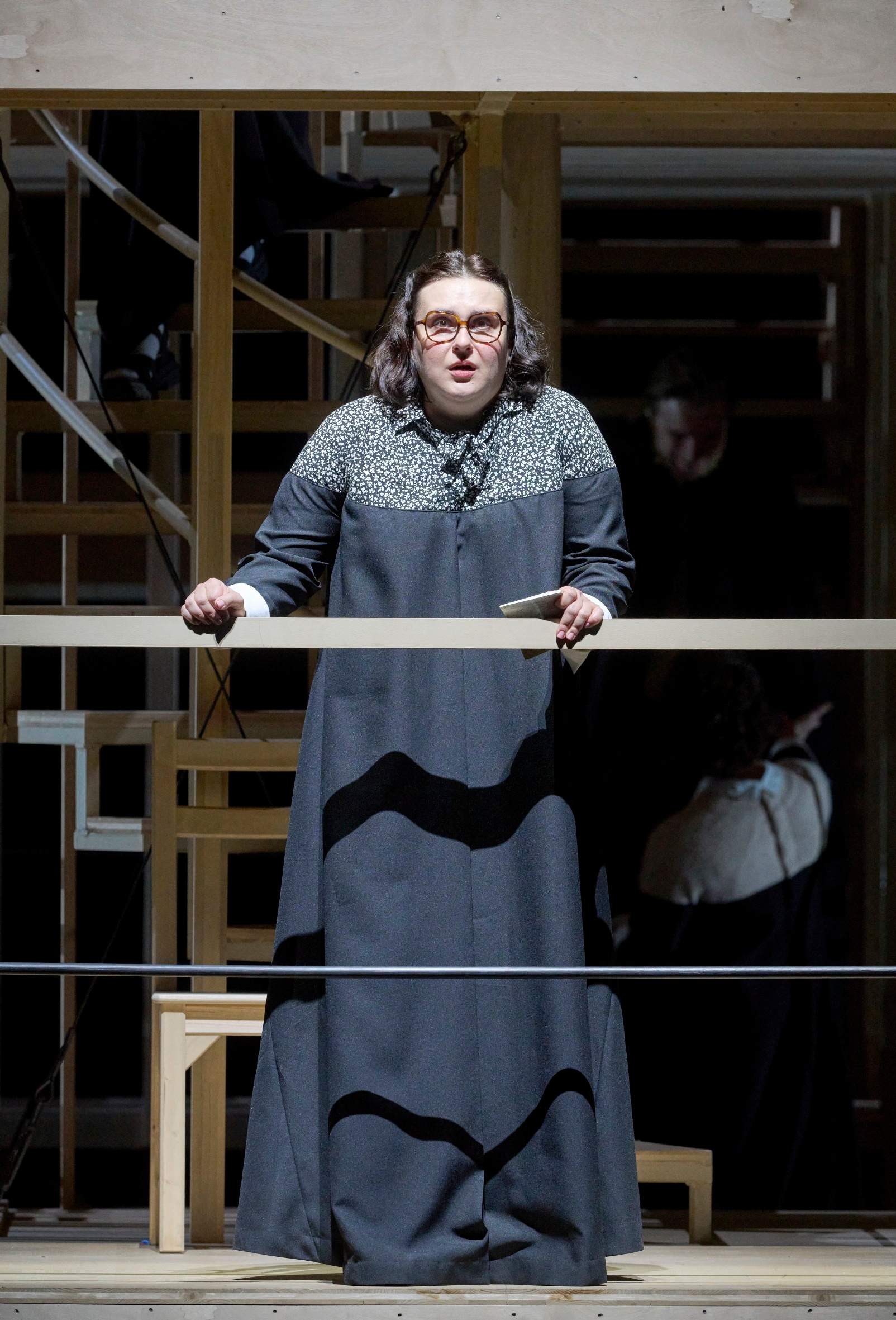
In the convent, Blanche, who chooses the religious name Sœur Blanche de l'Agonie du Christ (Sister Blanche of the Agony of Christ), witnesses the dying Prioress Madame de Croissy's agony at close quarters and is troubled by the young novice Sœur Constanze de St.-Denis with the vision that they would both die young and on the same day.
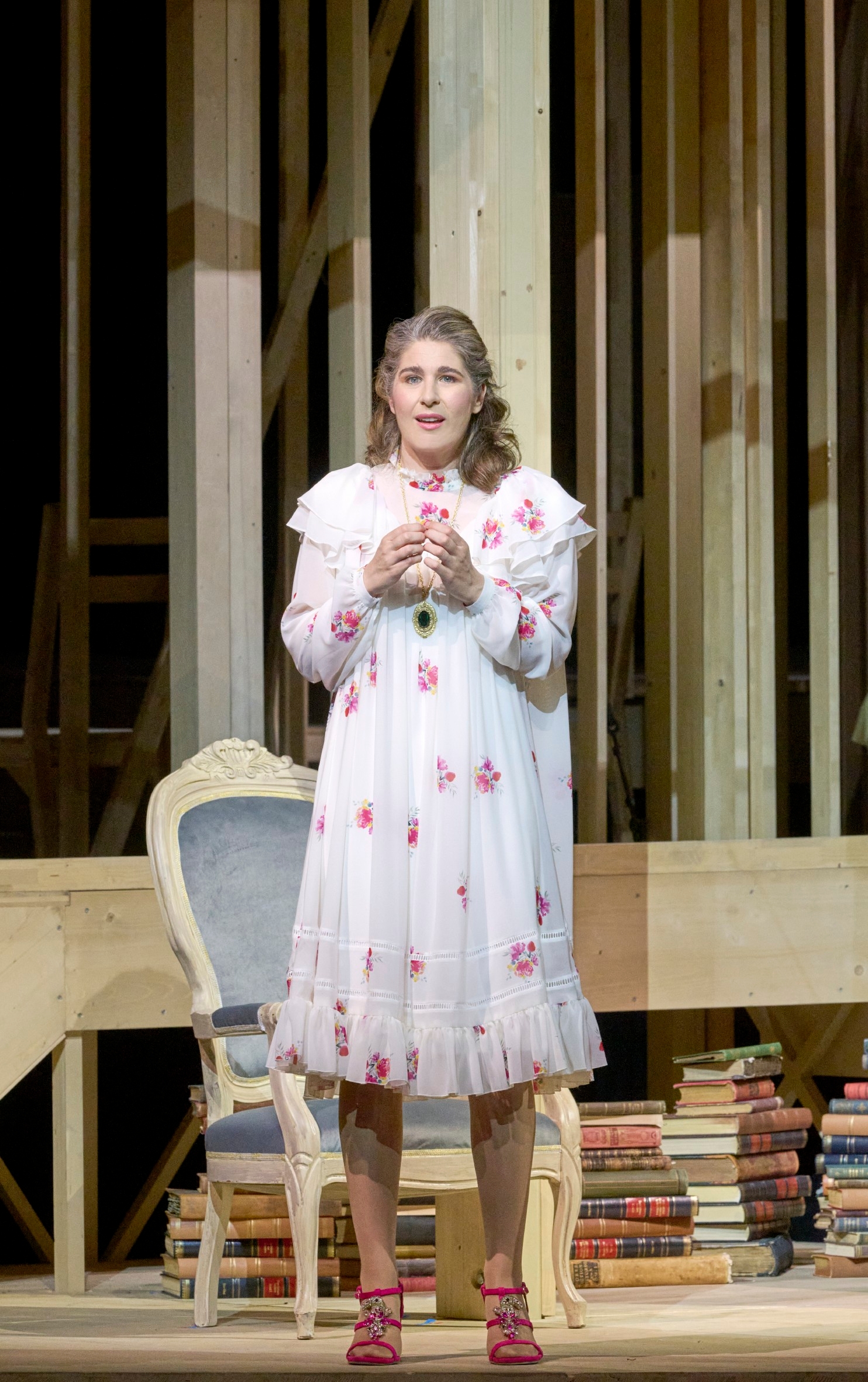
The new prioress, the bourgeois Madame Lidoine, swears the Carmelite nuns to prayer in times of incipient terror and warns them against a vain longing for martyrdom. When Madame Lidoine is summoned to Paris, the novice mistress Mère Marie de l'Incarnation arranges a vote that commits the sisters to martyrdom. Blanche is no longer able to cope with the pressure and her fear and takes refuge in the house of her now executed father, where she lives as a maid to the new owners.
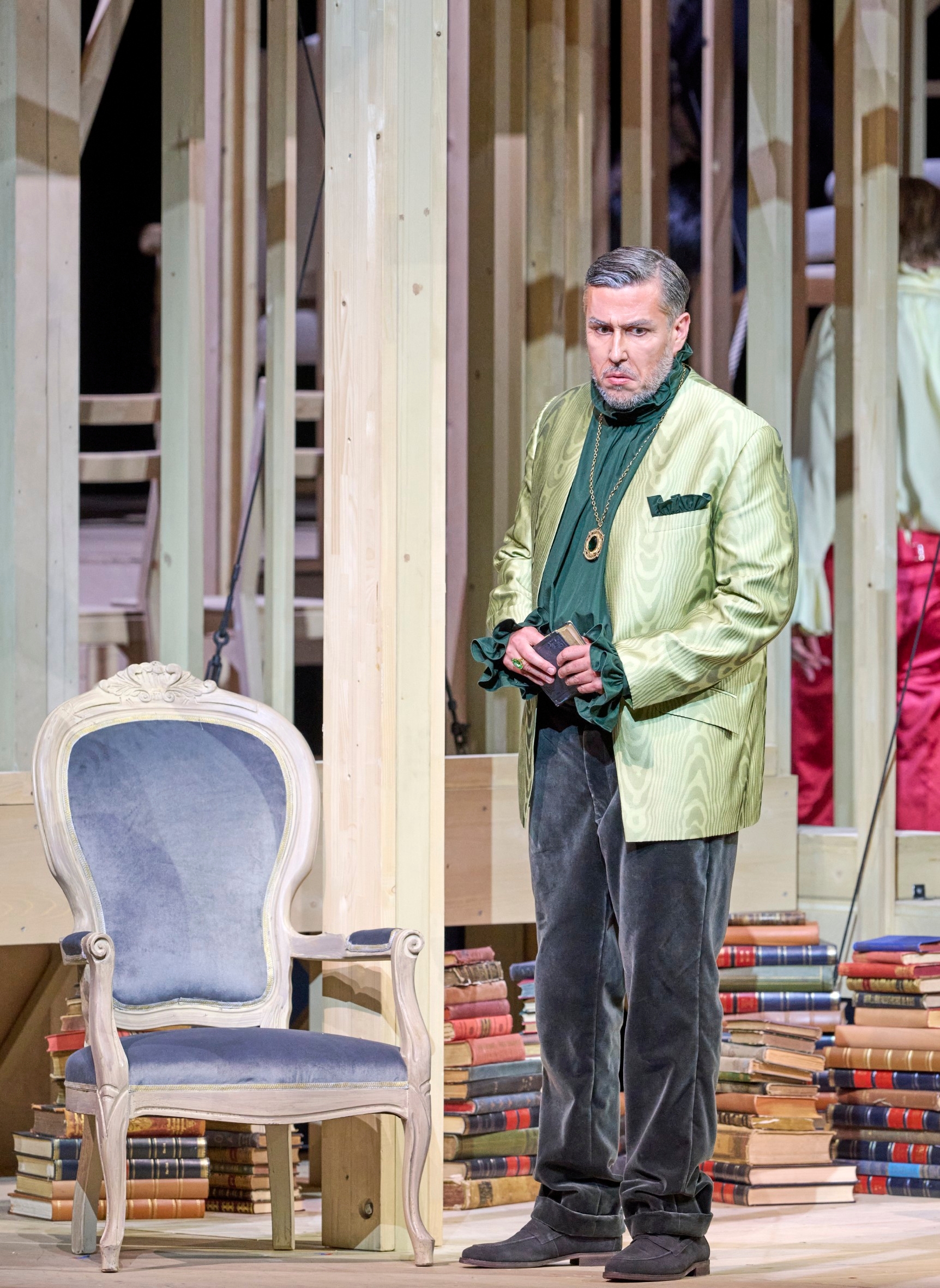
After the order was banned, the Carmelite nuns were initially declared citizens, but were then sentenced to death for counter-revolutionary conspiracy. The prioress was the first to go to the scaffold, while Mère Marie, who was not in the convent at the time of her arrest, escaped the martyrdom she sought. As the nuns go to the scaffold singing the Salve Regina, Blanche appears in the crowd. She joins in the chant and is the last to enter the scaffold.

Scene 1 - 6 80 min
Intermission 25 min
Scene 7 - 12 75 min

The liveliness of the work is also due to the distinctive work with recurring motifs that characterize the characters, but above all set atmospheric accents of an uncanny richness of facets. Magdalena Fuchsberger's production takes up this diversity, leading the Carmelite nuns through the »apartments of the inner castle« to the scaffold in haunting images. The Austrian director is currently attracting attention on german speaking stages with bold, yet perfectly crafted productions.

Francis Poulenc traces his characters in a captivatingly clear score which, like almost all of his compositions, moves within a tonal framework, more precisely in that of diatonic neoclassicism. Poulenc, whose great passion was song composition, is also a composer of voices and language here: the music serves the singing, the singing forms the characters, which Poulenc shapes with individual rhythmic diction and melody and lets them enter into the dialogues that give the work its title.

»Blanche, c'est moi«, wrote Francis Poulenc about the main character of his only full-length opera. »Blanche, that's me«. Here, the composer borrows the bon mot of another great French artist - "Madame Bovary, c'est moi" is what Gustave Flaubert is said to have said about his novel character. And like the quote, Poulenc appropriates the story of Blanche de La Force, who enters the Carmelite convent of Compiègne near Paris at the beginning of the French Revolution in 1789. The story of the 16 nuns of Compiègne, who were executed in Paris in 1794, forms the historically verified framework for a fictional plot in which the composer and librettist Poulenc tackles the ultimate human theme: The fear of death.

A woman in a black robe with a red and gray collar is standing on stage, facing away and looking to her side. In the background, wooden structures and a wooden lectern are visible, suggesting a theatrical setting.
A theatrical scene features three characters: a man in a yellow shirt and red pants, a woman in a white dress with floral patterns, and an older man in a green shirt and gold jacket. They stand on a wooden stage with stacks of books nearby, suggesting a dramatic moment.
A scene from a theatrical performance features two actors engaged in conversation. One is a woman in a floral white dress, standing near a wooden pillar, while the other is a man in a green jacket, standing with his hands in his pockets. A blue chair and stacked books are visible nearby.
Three women are depicted in a dramatic scene. One woman sits on a chair, gesturing animatedly, while another kneels on the floor, looking downcast. The third woman stands nearby, observing. The background features wooden stage framing, suggesting a theatrical setting.
A theatrical scene shows two women in dramatic poses. One woman, in a gray dress, is leaning over a bed, while another woman, dressed in black with floral accents, is crawling underneath the bed. A figure in a dark rabbit costume observes in the background, adding an eerie element.
Two women in long black dresses stand in a spotlight, facing each other with expressions of intensity. One woman has short hair and a brown-sleeved garment, while the other has long hair with a patterned collar. They are surrounded by a wooden frame set, suggesting a theatrical performance.
A performer stands on a wooden platform, singing passionately. She wears a long black dress with a patterned neckline and a white bow tie. The backdrop features wooden structures, suggesting a theatrical setting. Her expression is focused, conveying emotion as she holds a script in one hand.
A man in a green and gold jacket sits in a chair, appearing contemplative. Beside him is a figure in a black costume with a hood and bunny ears. The background features wooden scaffolding, books, and a bust statue, creating a theatrical setting.
A young man in a dark cape embraces a woman in a long, dark dress with a floral collar. Both appear concerned as they stand together on a stage with a wooden backdrop, suggesting a moment of tension or drama in a performance.
A group of people, dressed in dark robes, sits on a wooden stage while a man in a priest's attire stands at a podium, delivering a speech. The audience appears attentive, with a mix of expressions among the seated individuals. The backdrop consists of wooden structures.
A woman in a blue dress stands on stage, looking concerned. She is surrounded by people lying on the floor, suggesting a dramatic scene. The atmosphere is dimly lit with soft fog, creating a tense and emotional environment.

Spotify Playlist


FAQ

Tickets for our standing room can be purchased online or at the Bundestheater box office from 10 am on the day of the performance. BundestheaterCard holders can book standing room tickets online the day before the performance.

In addition, a fixed contingent of standing room tickets is available for regular evening performances from 80 minutes before the start of the performance at our standing room box office (Operngasse entrance).

Our operas are sung in the original languages - these vary depending on the work.

At each seat, subtitles in different languages can be switched on or off via a separate subtitle screen. In addition to the original language of the opera, you can choose from up to eight languages: German, English, Italian, French, Russian, Japanese, Spanish, Chinese (Mandarin).

In the event of a change of performance, you can of course return or exchange your tickets.

As changes to the cast cannot be ruled out due to illnesses or other hindrances of artists, there is no entitlement to a refund of the ticket price or exchange in this case.

Tickets cannot be returned or exchanged if you are not admitted to the auditorium due to being late (even after the interval).

About Your Visit

Cloakroom

The cloakrooms are located next the the entrances at the Operngasse. You can find additional cloakrooms on the left and right side of the balcony and the gallery and in the boxes. All cloakrooms are free of charge.

Be on Time

We kindly ask you to arrive on time for the performances. Latecomers can only be admitted during the intermission. After the intermission, re-entry will not be possible.

Food and Drink

Our gastronomy opens at the same time entry is permitted. You can enjoy some snacks and drinks before the performance starts or you can book a table for the break.

Practical Information

You can find more practical information regarding your visit (e.g. Dresscode, barrier-free-access, …) here.


Discounts, Subscriptions, Cycles

Discounts

The Vienna State Opera has the following offers for discounted tickets:

  • U27
  • Children's & youth tickets
  • BundestheaterCard
  • Ballet Bonus
  • Ö1-Club
  • Culture pass "Hunger for art and culture"
  • Disabled pass
More Info

Subscriptions

Choose a day of the week and your favorite seats and enjoy five performances.

  • 4x opera, 1x ballet
  • spread over the whole season
  • total savings of up to 30 % compared to the normal price
More Info

Cycles

Buy several performances bundled in a package!

  • large selection of different cycles
  • summarized according to composers, performers or themes
  • spread over the whole season
  • up to 10 % discount compared to the normal price
More Info

Dear visitor,

We want to improve our website and your online Opera experience. Thus we invite you to participate in a short anonymous survey.
Thank you for your time and feedback!
Best regards,
The Team of the Vienna State Opera